Ingredients
Method
Step 1: Prepare Your Ingredients
- Start by gathering all your ingredients. Slice the guanciale into thin strips. Next, crush the garlic cloves and slice your shallots. Make sure your San Marzano tomatoes are ready to go. This makes the cooking process smoother.
Step 2: Cook the Guanciale
- In a large skillet, heat the extra-virgin olive oil over medium heat. Once it's warm, add the sliced guanciale. Sauté it until it becomes crispy and golden brown, which usually takes about 4-5 minutes. Remember, the goal is to release that rich, flavorful fat without burning it.
Step 3: Add Garlic and Shallots
- Once your guanciale is nice and crispy, reduce the heat to low. Toss in the smashed garlic cloves and sliced shallots. Sauté for about 2 minutes. You want the aroma of garlic to fill your kitchen but be careful not to let it burn—nobody likes bitter garlic!
Step 4: Incorporate Tomatoes
- Now it’s time to add the crushed San Marzano tomatoes to the skillet. Stir well and let everything cook together for about 10 minutes. This allows the flavors to meld. If the sauce seems too thick, you can add a splash of pasta cooking water later to adjust the consistency.
Step 5: Cook the Bucatini
- While the sauce is simmering, bring a pot of salted water to a boil. Cook the bucatini noodles according to package instructions until al dente. This usually takes about 8-10 minutes. Make sure to reserve about half a cup of the starchy pasta water before draining.
Step 6: Combine Pasta and Sauce
- Once the bucatini is cooked, drain it and add it directly to the skillet with the sauce. Toss gently to combine, ensuring that each noodle is fully coated. If the sauce seems a bit dry, add some of that reserved pasta water a little at a time until you reach your desired consistency.
Step 7: Finishing Touches
- Sprinkle in the crushed red chili flakes, adjusting the amount to match your spice preference. Add salt and pepper to taste. Toss again, and serve the pasta hot.
Step 8: Serve and Garnish
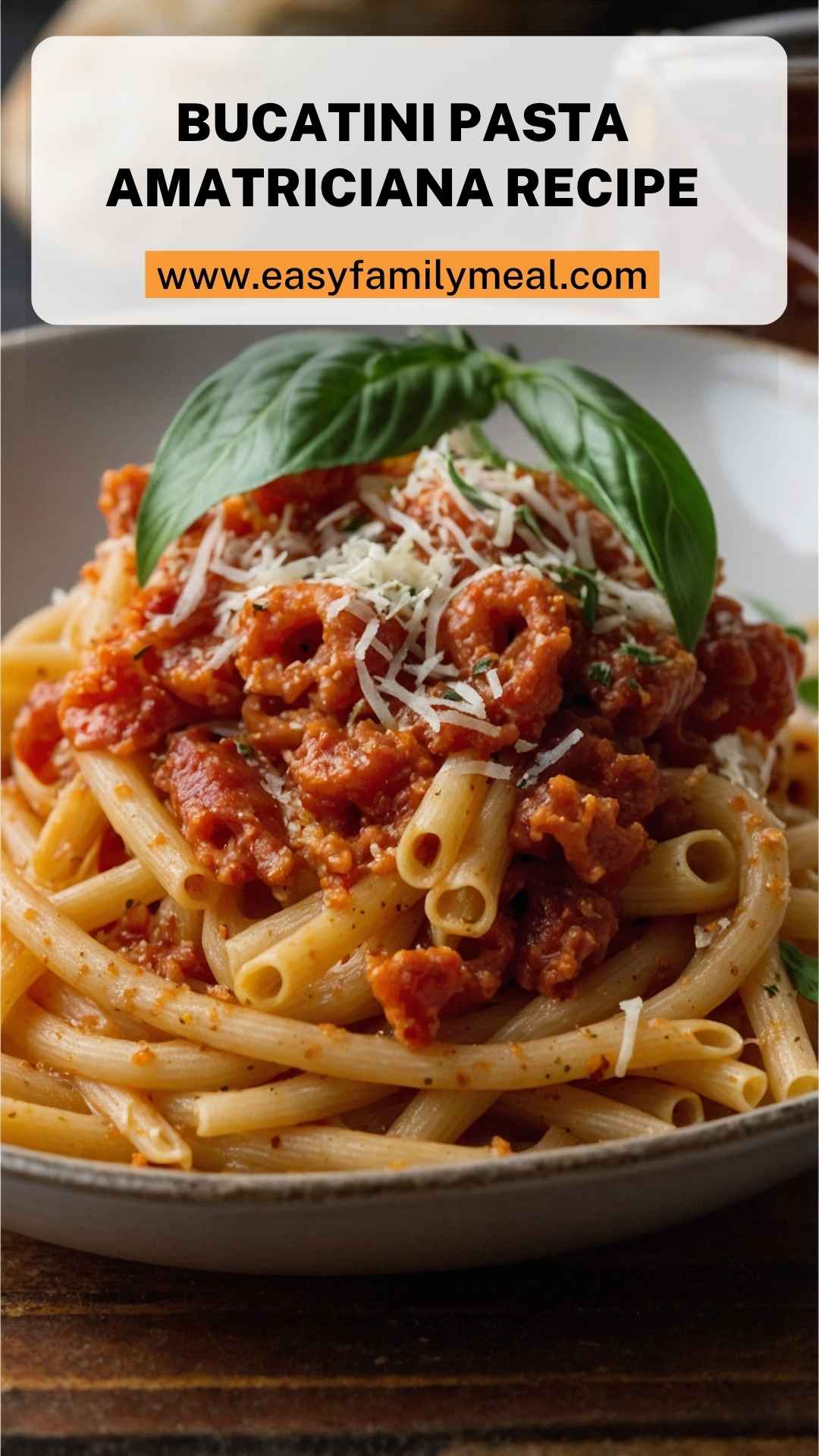
- Divide your Bucatini Pasta Amatriciana onto serving plates. Generously sprinkle with grated Pecorino Romano cheese and top with fresh basil. Sit back and enjoy your culinary masterpiece!
Notes
- Use Quality Ingredients: The better the quality of your ingredients, the better the overall dish will taste. Always aim for high-quality tomatoes and cheese.
- Don’t Skip the Pasta Water: Adding pasta water to your sauce not only helps loosen it but also adds extra flavor thanks to the starches.
- Adjust the Spice: If you love a kick, feel free to add more crushed red chili flakes or even a dash of hot pepper oil for extra heat.
- Experiment with Cheese: While Pecorino Romano is traditional, a sprinkle of Parmigiano-Reggiano can also work wonders.
- Make It Ahead: You can prepare the sauce a day in advance. Just warm it up when you're ready to serve with fresh pasta.