Ingredients
Method
Step 1: Preheat Your Oven
- Begin by preheating your oven to 250°F (120°C). A lower temperature is key for that melt-in-your-mouth texture.
Step 2: Prepare the Beef Tenderloin
- Trim any excess fat from the beef tenderloin. This not only prevents flare-ups in the oven but also ensures the beef doesn’t turn greasy. Season generously with kosher salt and black pepper to enhance flavor.
Step 3: Sear the Beef
- In a large skillet or cast-iron pan, heat 2 tablespoons of ghee over medium-high heat. Once melted, add the tenderloin. Sear on all sides until golden brown, about 2-3 minutes per side. This step is crucial as it locks in juices and adds depth of flavor.
Step 4: Add Shallots and Rosemary
- Once the tenderloin is seared, remove it from the heat. Add the chopped shallots and rosemary sprigs around the beef in the skillet. The shallots will cook and impart sweet flavor during roasting.
Step 5: Coat with Mustard and Ghee
- Brush the tenderloin with Dijon mustard, then drizzle the remaining ghee over it. This not only enhances the taste but also helps create a lovely crust.
Step 6: Roast in the Oven
- Transfer the skillet to the preheated oven. Roast the beef tenderloin slowly until it reaches an internal temperature of 125°F (52°C) for medium-rare. This usually takes about 1 to 1.5 hours, depending on the thickness of the meat.
Step 7: Rest the Meat
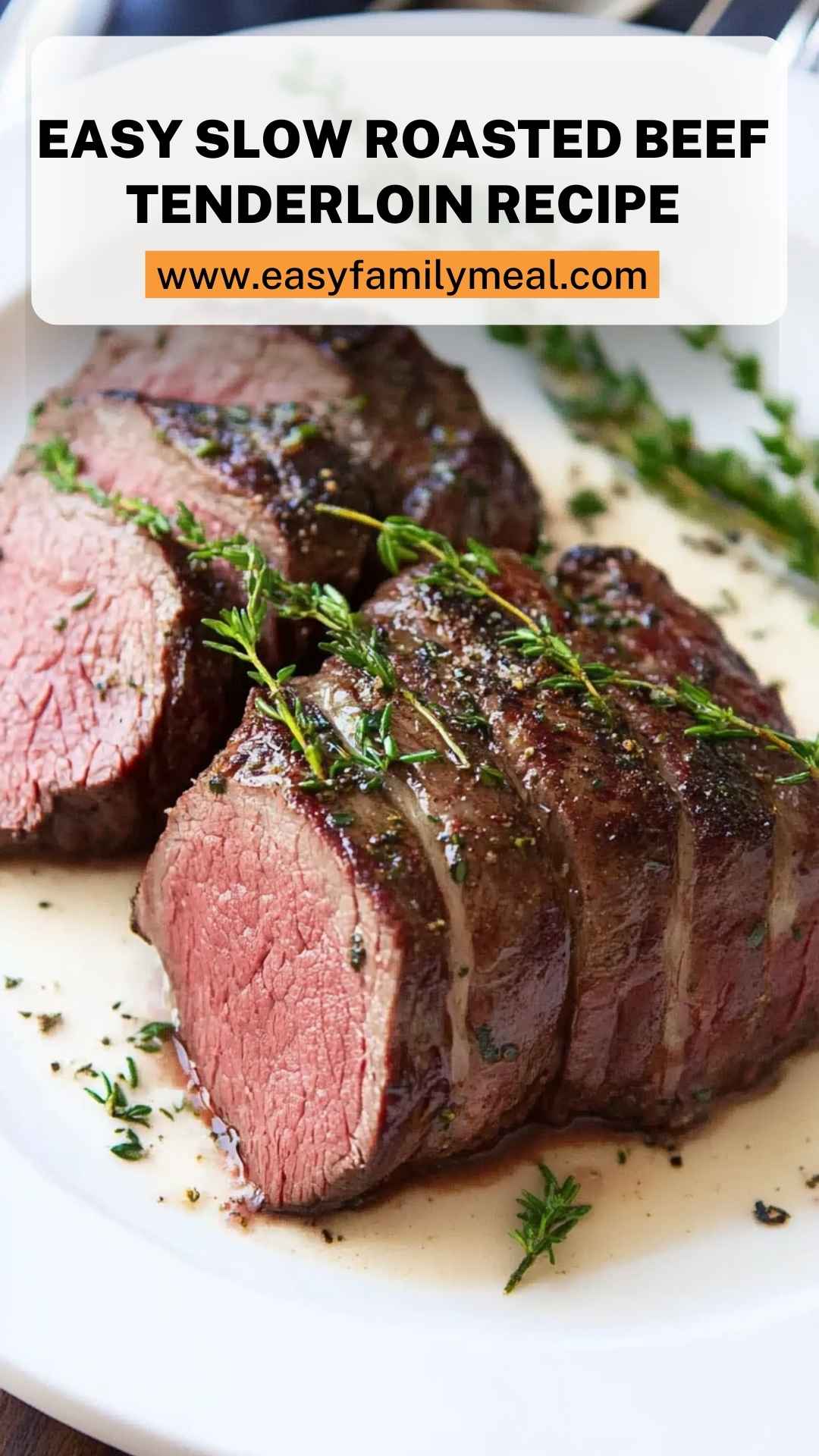
- After roasting, remove the beef from the oven and allow it to rest for at least 15-20 minutes. Resting is vital; it helps redistribute the juices, ensuring each bite is juicy and tender.
Step 8: Slice and Serve
- When ready, slice the tenderloin into medallions. Serve this delicious roast with flaked sea salt, freshly chopped tarragon, and your homemade horseradish cream sauce.
Notes
- Choose the Right Cut: Selecting a good quality center-cut beef tenderloin ensures better flavor and texture.
- Use a Meat Thermometer: Avoid overcooking by keeping an eye on the internal temperature.
- Low and Slow: Resist the urge to crank the heat; patience is your friend for this recipe.
- Resting is Key: Always let the meat rest before slicing to maintain moisture.
- Experiment with Flavors: Incorporate different herbs like thyme or garlic for variety.