Ingredients
Method
Step 1: Prepare the Brine
- Start by boiling the hot water in a large bowl, making sure it’s hot enough to dissolve the sugar and salt. I find it easier to use a whisk here. Add in the brown sugar, kosher salt, and crushed garlic if using. Stir until fully dissolved. If you love a hint of spice, toss in those whole black peppercorns. Let this magical mix cool completely. Trust me, skipping this step can lead to cooking the salmon — and that’s not what we want!
Step 2: Brine the Salmon
- Once your brine has cooled, it’s time to immerse the salmon. Place the salmon fillet skin-side down in a large dish or zip-top bag and pour the brine over it. Make sure the salmon is fully submerged. I like to weigh it down with a small plate or something similar. Let it sit in the fridge for 4 to 12 hours. This is crucial! The longer the salmon marinates, the more flavor it absorbs.
Step 3: Prepare for Smoking
- After brining, remove the salmon and pat it dry with paper towels. This is a key step in forming that beautiful crust during smoking. I like to let it sit out at room temperature for about 30 minutes, which helps it smoke evenly.
Step 4: Set Up the Smoker
- While the salmon rests, prepare your smoker. Use wood chips of your choice — hickory or cherry work wonderfully for salmon. Soak them in water for about 30 minutes before adding them to your smoker. This will create that smoky goodness we crave. Preheat your smoker to around 175°F (80°C) to 225°F (110°C) depending on your preferred doneness.
Step 5: Smoke the Salmon
- Place the brined salmon on the smoker grate, skin-side down. Close the lid and let that smoker work its magic. Keep an eye on the temperature; it should take about 1 to 3 hours, depending on the thickness of your fillet and the heat of your smoker. You can pull it when it reaches an internal temperature of 140°F (60°C), and it should flake easily.
Step 6: Final Touches
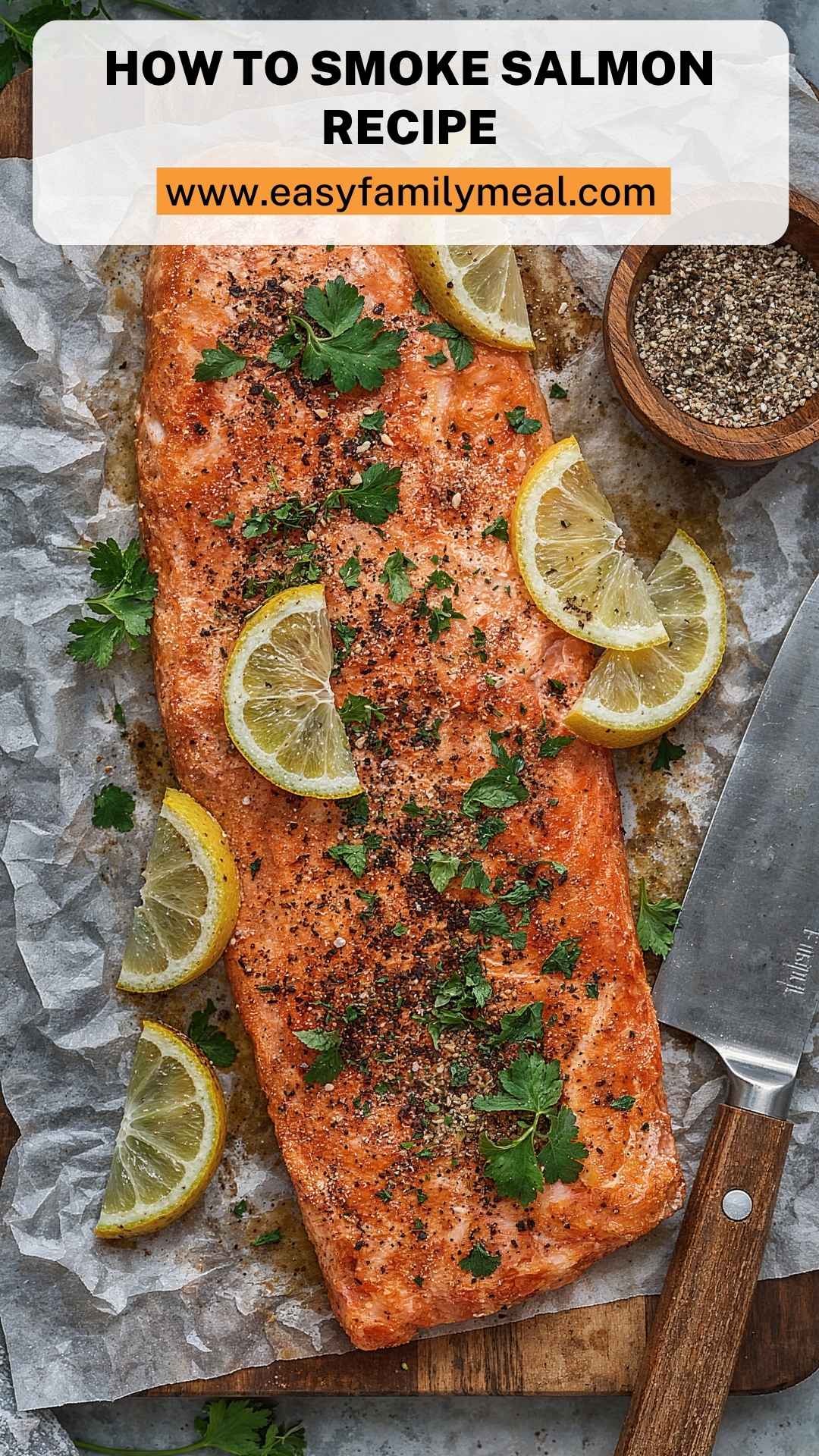
- Once the salmon is smoked, remove it from the heat and let it rest for a few minutes. This step allows flavors to settle and moisture to redistribute. After resting, it’s ready for slicing or flaking. Sprinkle some lemon pepper blend on top to amp up that flavor profile.
Notes
- Salmon: Freshness is key. I recommend visiting a trusted fishmonger for the freshest fillet. Farmed Atlantic salmon tends to be rich and fatty, while King salmon offers a slightly firmer texture.
- Kosher Salt: The best choice for this recipe. Its coarse grains draw out moisture effectively while maintaining a more balanced taste.
- Brown Sugar: This sugar is less processed than white sugar. The molasses content adds a depth that complements the salmon beautifully.
- Lemon: Don't skip the lemon—its acidity cuts through the richness of the fish, making each bite bright and delightful.
- Peppercorns and Garlic: These ingredients are optional, but they add a layer of flavor that you won't want to miss.