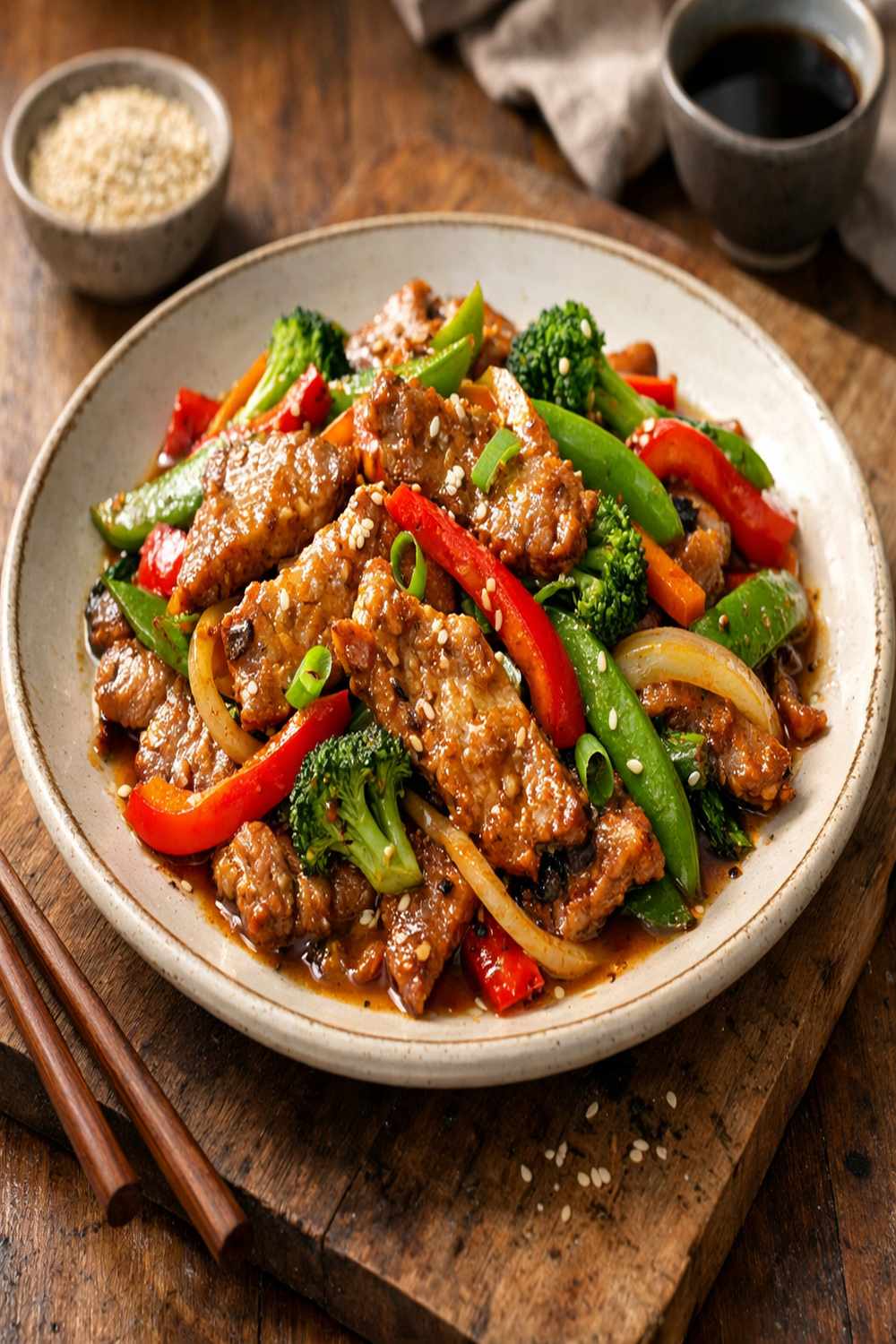

Ingredients
Method
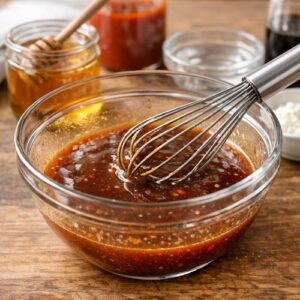
Step 1: Make Your Sauce First
- Grab a small mixing bowl and whisk together your reduced-sodium soy sauce, water, sriracha, honey, and cornstarch. This is your mise en place moment—the French culinary term for having everything ready before cooking begins. The cornstarch needs to be fully dissolved into the liquid, so whisk for about fifteen seconds until you don't see any white specks settling at the bottom. Set this aside where you can reach it easily. This step takes literally one minute, and it's the difference between feeling rushed and feeling in control during the cooking process.
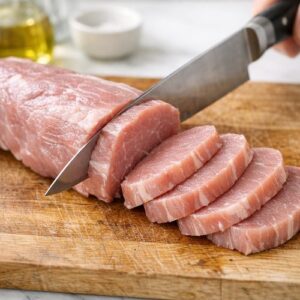
Step 2: Prep Your Pork the Right Way
- Pull your pork tenderloin out and place it on a cutting board. Using a sharp knife, slice it into ½-inch rounds—think of cutting a loaf of bread, not too thin or they'll dry out. Then take each round and cut it into three to four strips. You're aiming for roughly ¾-inch wide strips that will cook evenly in the pan. Some pieces will be smaller, and that's absolutely fine. This whole step takes about two minutes, and having uniform sizes means everything cooks at the same rate rather than some pieces being dry while others are still raw.
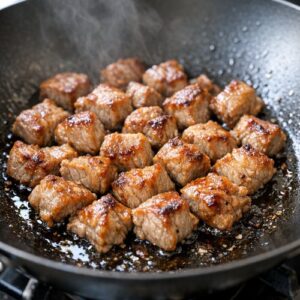
Step 3: Sear Your Pork Until Golden
- Place your large skillet or wok over medium-high heat and add one tablespoon of avocado oil. Wait until the oil shimmers and moves easily across the pan—this is your signal it's ready. Carefully add your pork strips in a single layer. Don't stir them for the first minute! Let them sit and develop a beautiful golden crust. After about one minute, give them a good stir and cook for another three to four minutes until they're no longer visibly raw on the outside. The pork doesn't need to be fully cooked through at this point; it'll finish cooking when it goes back in later. Transfer your cooked pork to a clean plate using a slotted spoon. This usually takes about five minutes total. Pro tip from my clinical experience: lean proteins like pork tenderloin dry out quickly, so we're cooking it in two stages to maintain moisture.
Step 4: Cook Your Vegetables Until Tender-Crisp
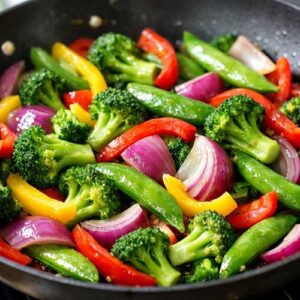
- Add your remaining tablespoon of avocado oil to the same skillet. Add your broccoli florets, bell peppers, red onions, and snap peas all at once. This is where the magic happens! Stir them constantly for about three minutes. You're looking for that tender-crisp texture where the vegetables have softened slightly but still have a pleasant bite. The broccoli should turn a deeper green, and the peppers should be just starting to soften at the edges. In the final thirty seconds, add your minced garlic and freshly grated ginger. Stir constantly during these last moments—you want the ginger and garlic to become fragrant and release their oils, but you don't want them to burn. If they start to stick, add a splash of water.
Step 5: Bring It All Together
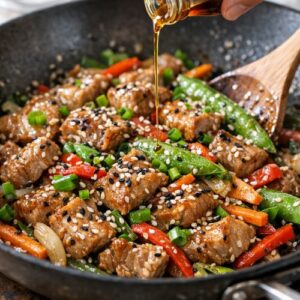
- Reduce your heat to medium. Add your pork back into the skillet with the vegetables. Give your sauce a quick stir from the bottom (the cornstarch settles as it sits), then pour it into the skillet. Stir everything constantly for about two more minutes. You'll see the sauce transform from slightly opaque to glossy and thick as it cooks and the cornstarch activates. The pork should now be completely cooked through, and everything should be evenly coated in that gorgeous glaze.

Step 6: Finish With Sesame Oil and Seeds
- Remove from heat and let it rest for about thirty seconds. Drizzle the toasted sesame oil over everything and give it one final gentle stir. This final touch adds authentic flavor and aroma that absolutely cannot be replicated by regular sesame oil. Sprinkle with sesame seeds for texture and visual appeal. Divide between four plates and serve immediately while the vegetables are still steaming.
Notes
- Don't skip the cornstarch step - This creates the signature glossy coating that makes the dish restaurant-quality. Without it, you just have pork and vegetables in thin sauce
- Keep your heat high - High heat creates tender vegetables and caramelized pork. Low heat creates steamed, pale results. The entire cooking process should feel energetic and fast
- Prep everything before you start cooking - Once your oil is hot, there's no time to chop. Have all vegetables, sauce, and pork ready to go
- Buy pre-minced garlic if you're short on time - Fresh ginger must be grated fresh (the flavor compounds degrade quickly), but garlic paste works perfectly in a pinch
- Use a wok if you have one - The sloped sides make tossing easier and faster. That said, a large skillet works absolutely fine
- Test pork tenderness with a fork - If you're unsure about doneness, poke it with a fork and gently press. Fully cooked pork should feel firm, not squishy