Ingredients
Method
Step 1: Rinse the Rice
- First, rinse the glutinous rice in cold water. This helps to remove excess starch. You want to gently agitate the rice with your fingers, swishing it around in a bowl. Drain and repeat this process two or three times until the water is almost clear.
Step 2: Soak the Rice
- Next, place the rinsed rice in a large bowl. Cover it with room-temperature water and let it soak for at least 8 hours or overnight. This step is crucial for achieving the right texture. It allows the rice to absorb water and swell.
Step 3: Drain and Prepare the Steamer
- After soaking, drain the rice. Get a steaming basket lined with cheesecloth or banana leaves, if available. If using banana leaves, be sure to cut them to fit your steamer. Place the rice inside, spreading it out evenly.
Step 4: Steam the Rice
- Set up your steamer over boiling water. Steam the rice for about 20 to 30 minutes. You will know it's done when each grain is chewy and glossy. It should be somewhat sticky but not hard or dry. If you’re using coconut milk, drizzle it over the rice during the last few minutes of steaming to infuse it with rich flavor.
Step 5: Serve
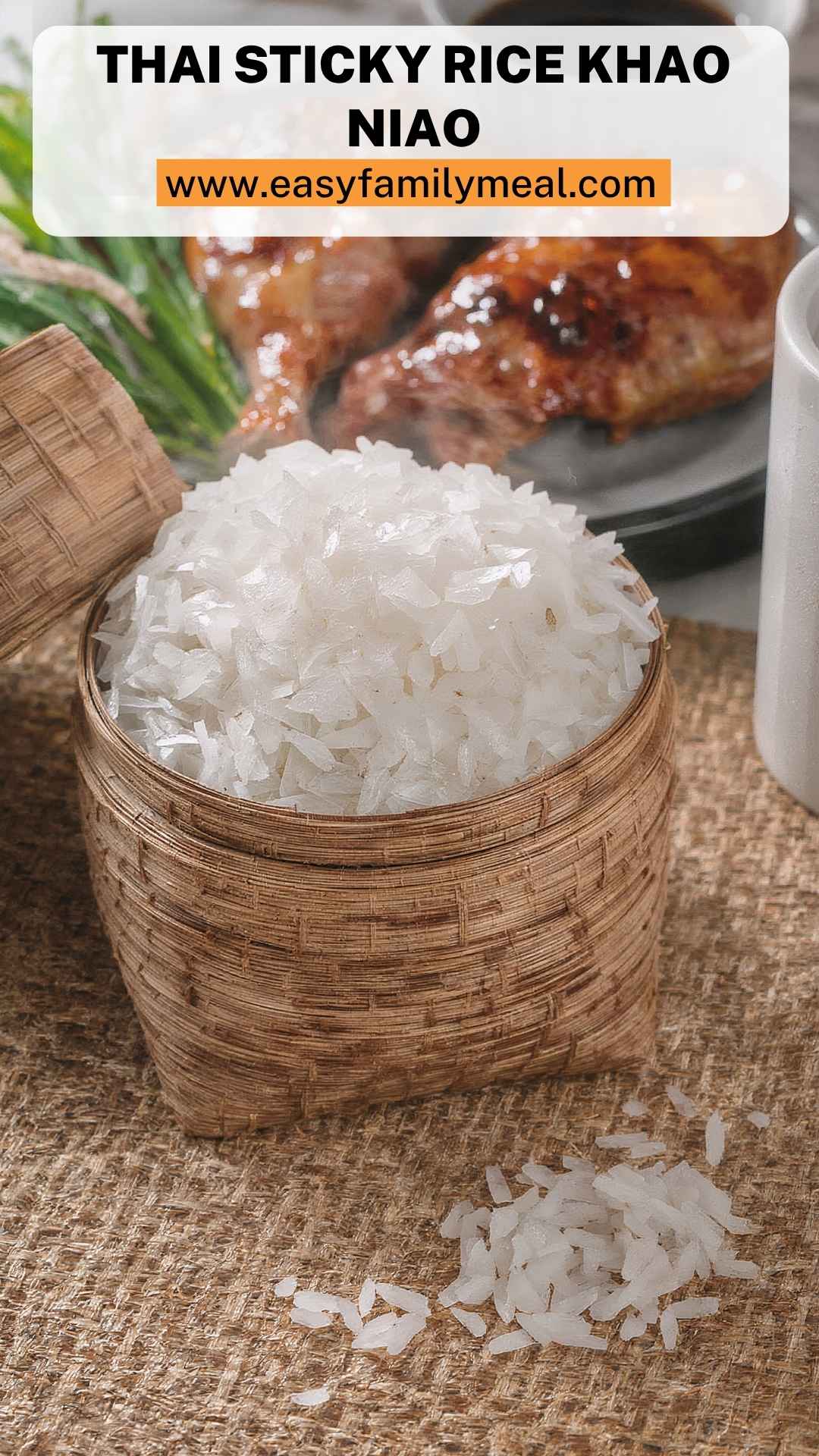
- Once the rice is cooked, remove it from the steamer. You can mound it onto a serving platter or form it into small balls. Serve with fresh mango, spicy dipping sauces, grilled meats, or as part of a larger Thai feast.
Notes
- Soaking Time is Key: If you want the best texture, do not skip the soaking step.
- Use Quality Ingredients: Opt for high-quality glutinous rice. The taste and texture differ significantly from regular rice.
- Experiment with Coconut Milk: Adjust the amount of coconut milk for richness to your liking.
- Steamer Setup: Make sure your pot has a tight lid to retain steam for even cooking.
- Serve Immediately: Sticky rice tastes best when freshly made. But, it can be reheated later if necessary.