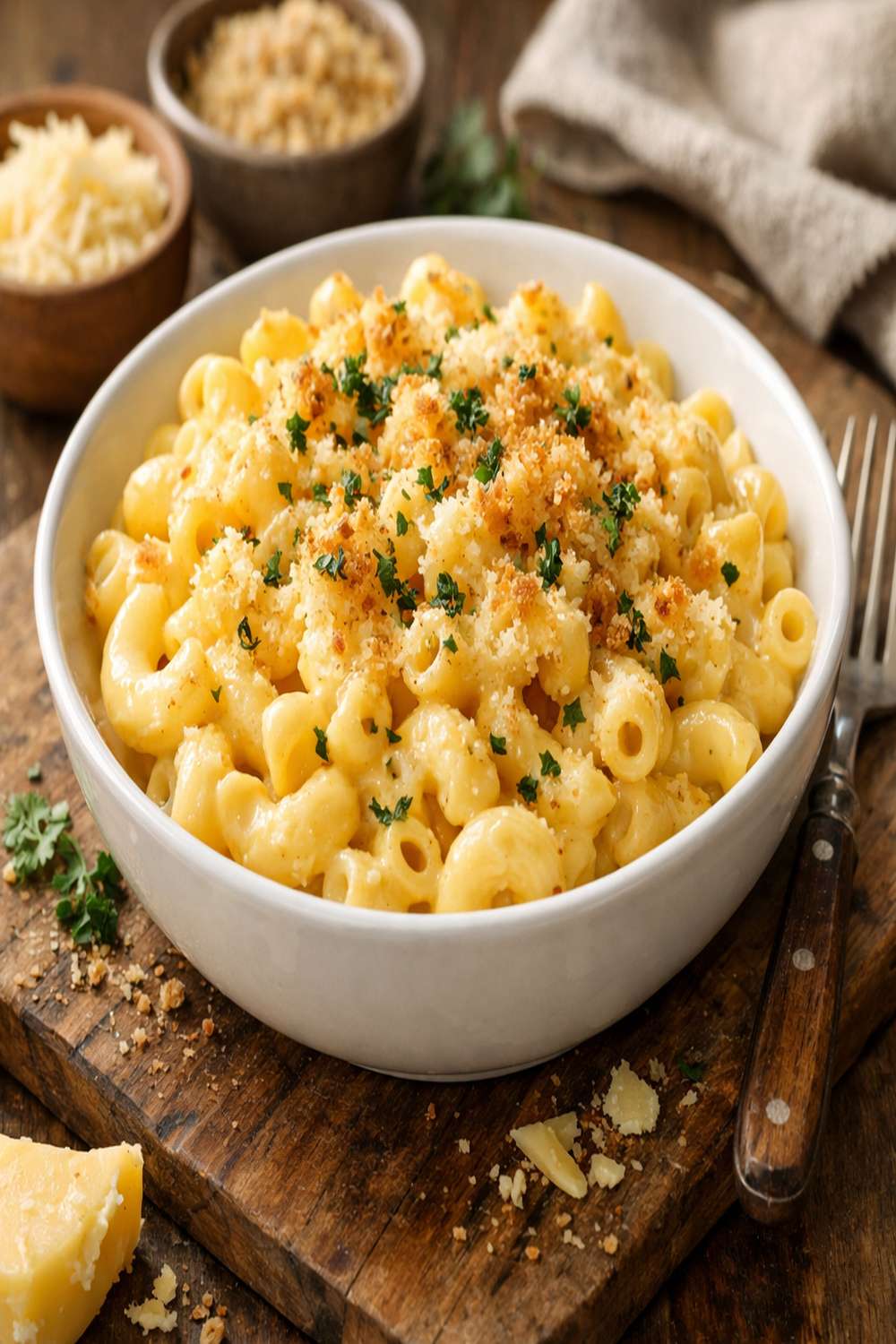

Ingredients
Method
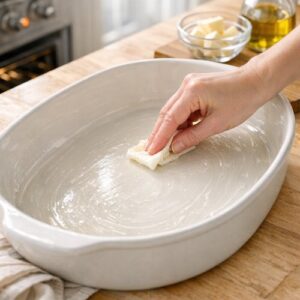
Step 1: Prepare Your Pan and Preheat Your Oven
- Start by turning your oven to 350°F. While it heats, lightly grease a large baking dish—I use a 3-quart or 4-quart ceramic dish, which distributes heat evenly. A light coating of cooking spray or butter is all you need. Set it aside within arm's reach of your stove.
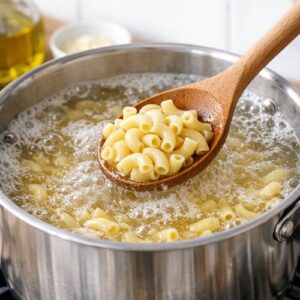
Step 2: Cook Your Pasta to Just-Shy-of-Tender
- Bring a large pot of salted water to a rolling boil—the water should taste like the sea. Add your pasta and cook until it reaches one minute before al dente according to the package instructions. This is important: we're undercooking slightly because the pasta will continue cooking in the oven. Drain the pasta in a colander, then return it to the empty pot. Drizzle with the olive oil and stir gently to coat every piece. This prevents sticking and keeps the pasta separated. Set the pot aside while you make the cheese sauce.
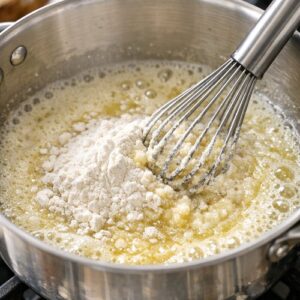
Step 3: Create Your Roux Base
- In a deep saucepan or Dutch oven, melt the 6 tablespoons of butter over medium heat. Once melted and foamy, add your flour all at once and whisk constantly for about 1 minute until the mixture turns light golden and smells nutty. You're creating a roux here—that's the foundation of your sauce. This step cooks out the raw flour taste while creating a thickening agent. Don't skip it or rush it.
Step 4: Build Your Cheese Sauce
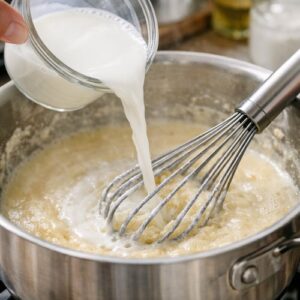
- This is the critical moment. Reduce your heat to medium-low. Slowly pour in the whole milk while whisking constantly—and I mean constantly. You're preventing lumps by combining the roux and milk gradually. Once the milk is incorporated, add the heavy cream and keep whisking until the mixture is completely smooth. Continue cooking and whisking until you see small bubbles breaking on the surface, then continue for another 2 minutes. This ensures the flour is fully cooked and the sauce begins to thicken. Season with salt and pepper to your taste—I usually add about ½ teaspoon of each.
Step 5: Incorporate Your Cheese
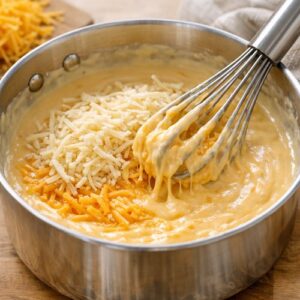
- Remove the pot from heat. Add 2 cups of your shredded cheddar cheese and whisk until completely smooth and incorporated. Then add the 2 cups of Gruyere cheese and continue whisking until the sauce is creamy, glossy, and noticeably thickened. The sauce should coat the back of a spoon. If you run your finger across the spoon, the path should stay clear for a moment before sauce flows back to fill it. This is the perfect consistency.
Step 6: Combine Pasta and Sauce
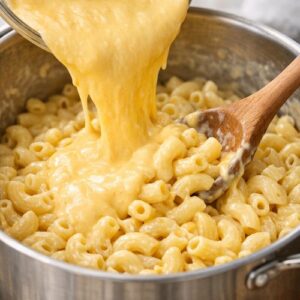
- Pour the cheese sauce into your pot of cooled pasta. Using a wooden spoon or silicone spatula, gently fold and stir until every piece of pasta is completely coated with the creamy sauce. Take your time here—you want an even distribution so every bite has sauce.
Step 7: Layer in Your Baking Dish
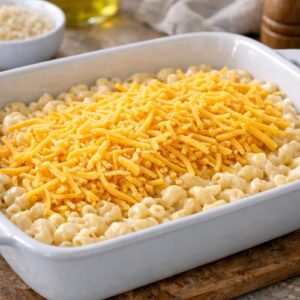
- Pour half of your pasta mixture into the prepared baking dish, spreading it evenly across the bottom. Sprinkle the remaining 2 cups of shredded cheddar cheese over this layer. Then add the remaining pasta mixture on top, spreading it gently so the cheese shows through in places.
Step 8: Create and Add Your Golden Topping
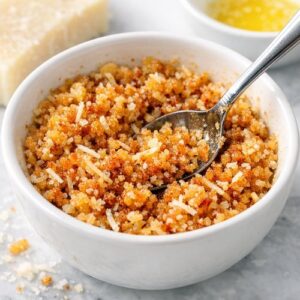
- In a small bowl, combine the panko breadcrumbs, melted butter, shredded Parmesan cheese, and smoked paprika. Stir until the breadcrumbs are evenly moistened with butter and the paprika is distributed throughout. This mixture will become your golden, crunchy crust. Sprinkle this topping evenly over the entire surface of your pasta. Don't press it down—you want it to stay light and crispy during baking.
Step 9: Bake Until Bubbly and Golden
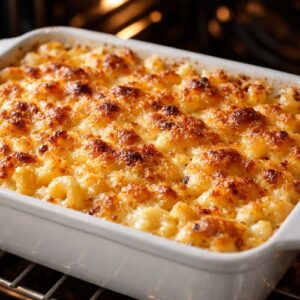
- Place your baking dish in the preheated 350°F oven and bake for approximately 30 minutes, until the top is golden brown and you can see the cheese sauce bubbling around the edges of the dish. The bubbling around the edges tells you the sauce is hot all the way through. Remove from the oven and let it rest for 5 minutes before serving. This resting period allows the sauce to set slightly, so you get clean scoops that hold together beautifully on the plate.
Notes
- Undercook your pasta intentionally - This prevents mushy, overcooked pasta after baking. The pasta continues cooking in the oven, so stopping one minute early is crucial.
- Use freshly shredded cheese - Pre-shredded cheese contains anti-caking agents that can make your sauce grainy. Take two extra minutes to shred from a block. Your sauce will be noticeably creamier.
- Keep your heat moderate - High heat can break the sauce and cause the milk solids to separate. Medium and medium-low are your friends throughout this recipe.
- Don't skip the resting period - Those five minutes after baking allow the sauce to set and make serving infinitely easier. This is a pro tip from my years working with families who are always in a rush.
- Make the panko topping ahead - Mix the breadcrumb topping the morning of serving and store it in a sealed container. Sprinkle it on just before baking for maximum crunch.
- Use a Dutch oven or large saucepan - The depth matters. A shallow pan makes whisking and combining ingredients harder. Choose a pot that's at least 4 quarts.